
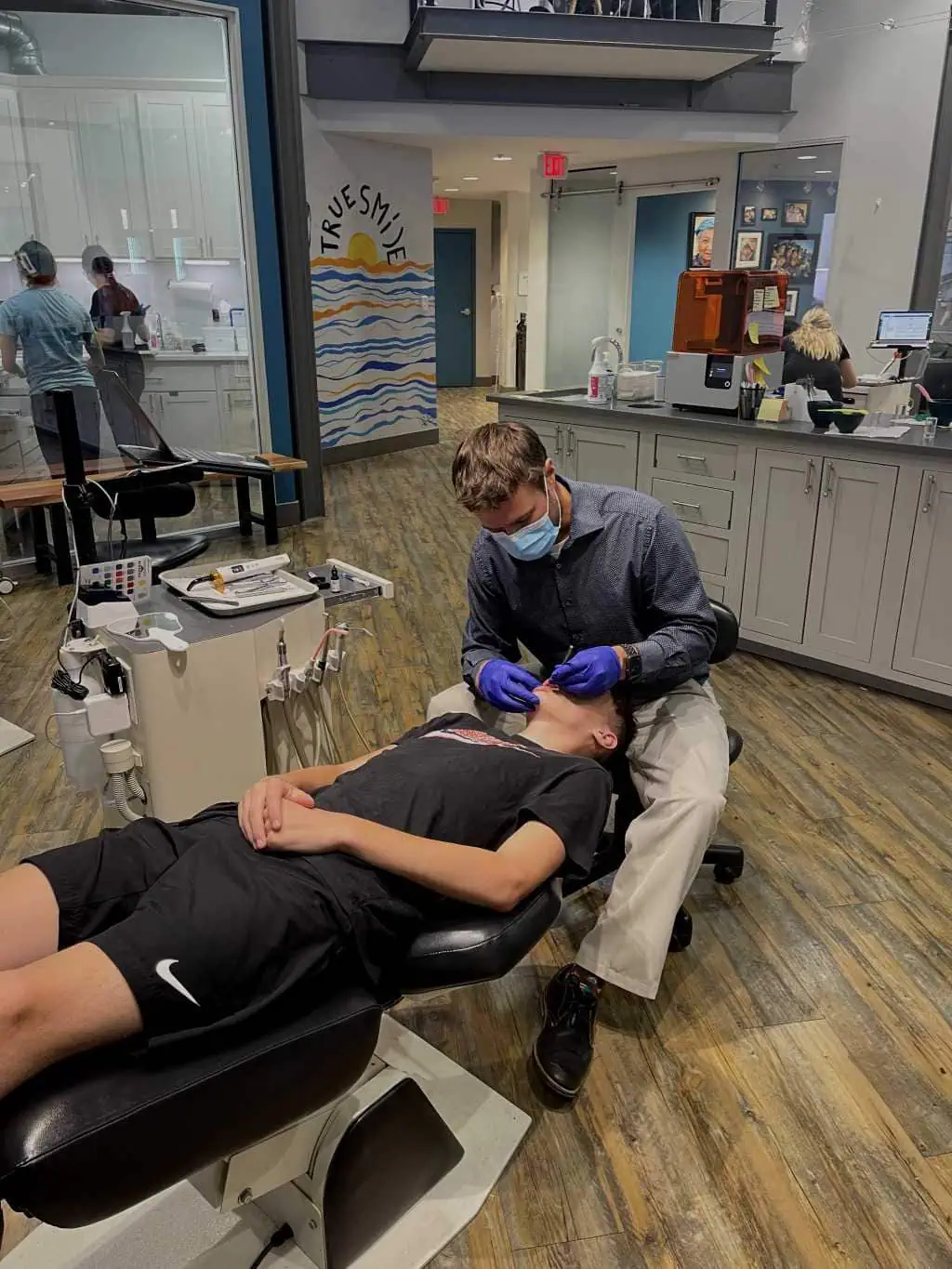
Ceramic braces work exactly like metal braces, with a bracket on each tooth and a guiding wire, but the brackets are tooth-colored and much harder to spot. Metal braces are tougher and simpler to maintain; ceramic trades some toughness for discretion.
What is the difference between ceramic and metal braces?
The difference is the bracket material, not the way the teeth move. Both systems use a small bracket on the front of each tooth and an archwire running through them. The wire applies steady, gentle pressure, and the orthodontist adjusts it over a series of visits until the teeth and bite are where they should be. The biology underneath, bone remodelling around each root, is identical whichever bracket you choose.
What metal braces are made of
Traditional braces use stainless steel brackets. Steel is strong, smooth and forgiving, which is why it has been the default for so long. Metal brackets are held to the wire with small elastic ties, and those ties come in colors, so many kids and teens treat each adjustment visit as a chance to pick a new combination.
What ceramic braces are made of
Ceramic brackets are made from a translucent or tooth-colored ceramic that blends with the enamel behind it. At True Smile Orthodontics, the ceramic option is Clarity Advanced, a clear bracket with rounded corners designed to reduce friction and keep your lips from catching. You can compare every bracket style on our page covering the types of braces we offer.
Do they straighten teeth equally well?
For the large majority of cases, yes. Crowding, spacing and most bite corrections respond to ceramic brackets just as they do to metal ones. The factors that decide how long treatment takes are how complex the bite is, how the jaws are growing, and how consistently elastics and appointments are kept, not the color of the bracket.
How do ceramic and metal braces compare side by side?
This table sets out the practical differences patients usually ask about during a consultation.
| Factor | Metal braces | Ceramic braces |
|---|---|---|
| Appearance | Visible silver brackets; colored ties are optional and can be fun | Tooth-colored brackets that blend in, especially at conversational distance |
| Strength | Very durable; brackets rarely crack | Strong but more brittle than steel; can chip under hard biting forces |
| Staining | Brackets do not stain | Brackets resist stains, but clear elastic ties can pick up color from coffee, tea, cola and curry |
| Comfort | Smooth steel edges; a short adjustment period | Rounded-corner designs are gentle on lips and cheeks |
| Best fit | Kids, contact-sport players and complex bites | Image-conscious teens and adults with typical cases |
| Removal | Straightforward at the end of treatment | Removed with a little more care to protect the enamel |
What are the advantages and trade-offs of ceramic braces?
Why patients choose ceramic
The appeal is simple: most people will not notice them. That matters to adults who present at work, to teens heading into photo-heavy years, and to anyone who wants the precision of fixed braces without a mouthful of metal. Because ceramic brackets stay on the teeth, there is nothing to remember to wear, which is a real advantage over removable options for patients who know they would leave trays in a drawer.
What to plan around
Ceramic is harder than tooth enamel. For that reason, orthodontists sometimes place ceramic brackets on the upper teeth only, or use metal on lower teeth where the upper teeth bite down onto them. Ceramic can also chip if you bite into something hard, so the usual braces food rules matter a little more. Finally, the elastic ties that hold the wire are changed at each adjustment, but between visits they can take on a tint from strongly colored food and drinks.
What about cost?
Ceramic brackets cost more to manufacture, and many practices price ceramic treatment above metal as a result. The only reliable number is the one in your written treatment plan. True Smile offers no-contract options, zero down payments and zero-interest financing, and the team will help you work through your insurance claim. See our financial information for accepted payment methods, including OrthoBanc.
Who is a good candidate for ceramic braces?
Ceramic braces suit most patients whose permanent teeth have come in and who are comfortable taking a little extra care with food and cleaning. They are especially popular with two groups.
Teens
For many teenagers, the deciding factor is confidence. Ceramic brackets keep the reliability of fixed braces while looking far more subtle in school photos and on video calls. Our page on braces for teens explains how treatment fits around sports, band and a busy schedule.
Adults
Adults are often the most motivated ceramic patients. Many have waited years to straighten their teeth and do not want treatment to be the first thing colleagues notice. If you are weighing your options, our adult braces page covers the discreet choices available, including hidden braces placed behind the teeth.
When metal is the better call
Metal braces are usually the smarter choice for younger children, for players in contact sports where a knock to the mouth is likely, and for some complex bites that need heavier forces or extra attachments. Kids who want their braces to be a talking point can go the other way entirely: WildSmiles brackets come in shapes like stars, hearts and soccer balls.
What happens when ceramic braces are placed and adjusted?
The appointments are the same whichever bracket you choose, so it helps to know what each one involves.
Placement day
The teeth are cleaned, polished and gently conditioned so the bonding material grips the enamel. Each bracket is positioned individually, set with a curing light, and then the first archwire is threaded through. The visit is painless. Most people feel pressure and some tenderness over the next few days as the teeth begin to respond, and soft foods help during that stretch.
Adjustment visits
At regular visits the orthodontist checks progress, changes the elastic ties and, when the teeth are ready, moves to a firmer wire. With ceramic braces, most patients choose clear, white or silver-gray ties so the brackets stay discreet, and fresh ties at each visit keep them looking clean. Later in treatment, small rubber bands between the upper and lower teeth may be added to fine-tune the bite, and those work the same way on ceramic and metal brackets.
If a bracket chips or comes loose
A loose or chipped bracket is not an emergency, but it should not be ignored either, because a tooth without a working bracket stops moving as planned. Call the office, keep any loose pieces, and cover sharp edges with orthodontic wax until it can be repaired. Patients who play sports should wear a mouthguard over their braces; a custom mouthguard fits around the brackets far better than a boil-and-bite guard from a sporting goods store.
How do ceramic braces compare with clear aligners?
Ceramic braces and clear aligners both aim to be discreet, but they work differently. Aligners are a series of removable trays, and they only work while they are being worn, so success depends heavily on wearing them all day. Ceramic braces are fixed, so compliance is built in, and they give the orthodontist precise control over individual teeth.
Some patients are a good fit for both, and the choice comes down to lifestyle. If you like the idea of removing your appliance to eat and brush, ask about Invisalign clear aligners. If you would rather not think about your appliance at all, ceramic braces are hard to beat.
There is also a third discreet route for adults: hidden braces such as InBrace, which are bonded to the back surfaces of the teeth so nothing shows from the front. They suit a narrower range of cases than ceramic braces or aligners, so ask whether your bite qualifies if complete invisibility is your priority.
How do you care for ceramic braces day to day?
Caring for ceramic braces is the same as caring for metal braces, with a little extra attention to staining and hard foods.
- Brush after every meal with a soft-bristled toothbrush and fluoride toothpaste, working around each bracket.
- Floss once a day with a floss threader, and use an antiseptic mouthwash to keep the gums healthy.
- Rinse with water after coffee, tea, cola or deeply colored sauces to protect the clear ties.
- Skip ice, hard candy, popcorn kernels and anything you would need to crack with your front teeth.
- Keep your regular cleanings with your family dentist throughout treatment.
Mild soreness for a few days after placement and after some adjustments is normal for either type of bracket, and it fades quickly. When treatment ends, every patient moves on to a custom retainer to hold the result, worn full time at first and then at night.
Ceramic braces FAQ
Are ceramic braces as effective as metal braces?
Yes, for most cases. Both systems move teeth with the same archwire mechanics. The orthodontist may recommend metal for certain complex bites or place metal brackets on lower teeth, but typical crowding, spacing and bite corrections respond equally well to ceramic brackets.
Do ceramic braces stain?
The ceramic brackets themselves resist staining. The clear elastic ties that hold the wire can pick up color from coffee, tea, cola, curry and tobacco between visits. They are replaced at each adjustment, and rinsing after strongly colored food and drinks keeps them looking clear.
Do ceramic braces take longer than metal braces?
Not in a way most patients would notice. Treatment length depends mainly on the complexity of the bite, growth and how well elastics and appointments are kept. The bracket material rarely changes the overall timeline for a typical case.
Can I switch from metal to ceramic braces during treatment?
It is sometimes possible, but it means removing and rebonding brackets, which adds chair time. It is far simpler to make the choice at the start, which is why the consultation covers every bracket option before anything is placed.
Find out which braces fit your smile
The best way to decide between ceramic and metal is to see what your own bite needs. At a complimentary consultation at our Tulsa or Bixby office, you will discuss your goals, have digital x-rays and an exam, and walk through every option with our team, in English or Spanish. An iTero scanner even lets you preview your future smile before treatment begins, and in most cases you can start the same day.